Introduction
PCL Nursing is one of the most popular and career-oriented health science programs for students in Nepal after SEE. If you have recently completed your SEE (Secondary Education Examination) and are dreaming of a career in nursing, this complete guide is for you.
In this blog, we cover everything you need to know about PCL Nursing admission in Nepal — from eligibility and the updated admission process to fees, scholarship seats, top colleges, year-wise subjects, and career scope after graduation. Whether you are from a government school or a private school, whether you are from Kathmandu or a remote district, this guide has all the answers.
What is PCL Nursing?
PCL Nursing stands for Proficiency Certificate Level in Nursing. It is also commonly known as Staff Nurse in Nepal. It is a 3-year diploma-level health science program introduced by the Council for Technical Education and Vocational Training (CTEVT) in 1999 AD (2056 BS).
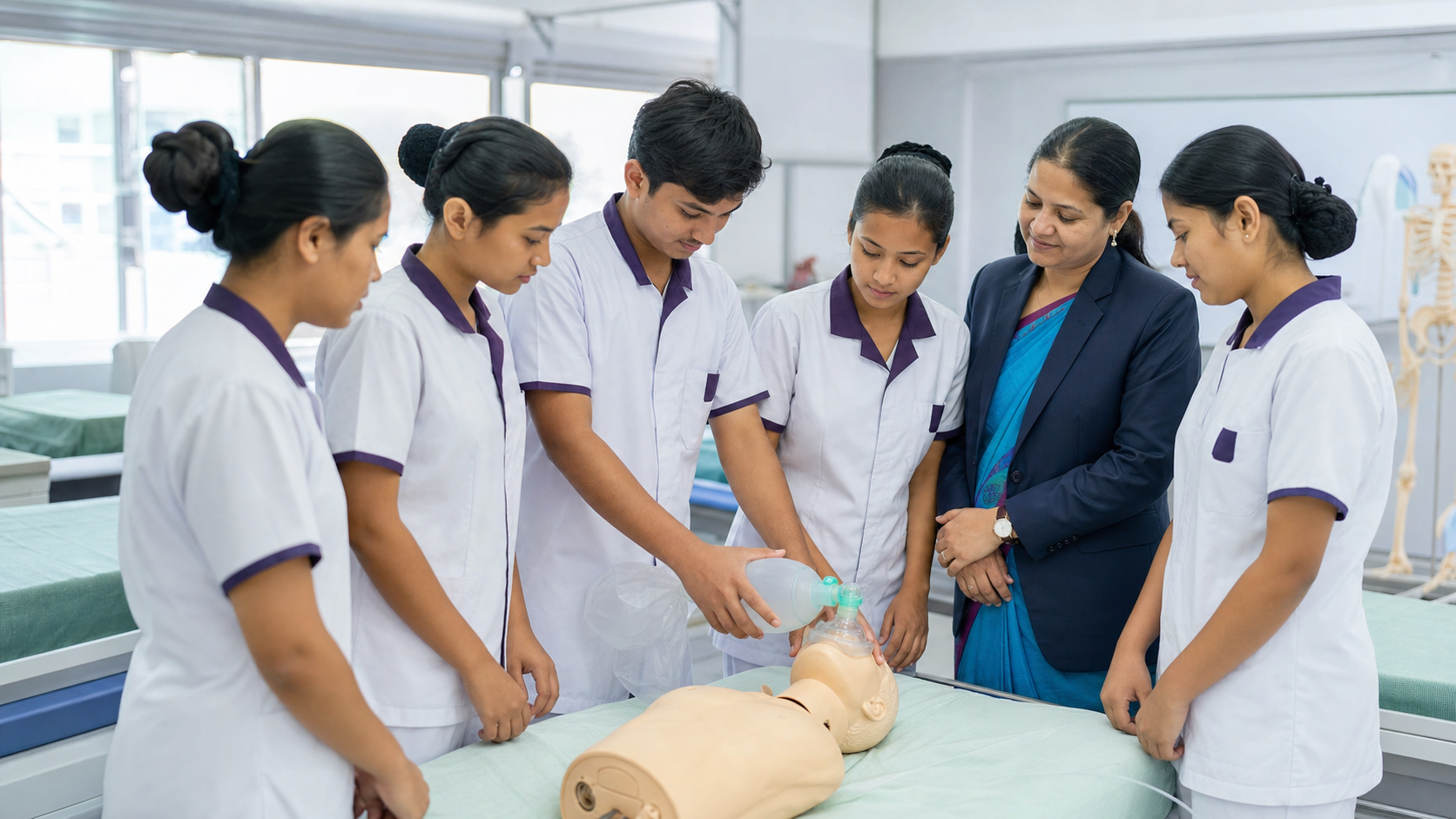
The program is designed to train students as competent, compassionate professional nurses who can deliver preventive, curative, and community-based healthcare services across Nepal. After completing PCL Nursing, students are eligible to register as Staff Nurses with the Nepal Nursing Council (NNC) and work in hospitals, clinics, health posts, and community health programs.
Key Fact: PCL Nursing is the most accessible entry point into the nursing profession. Unlike BSc Nursing, it does not require a +2 Science background — you can apply directly after SEE.
Who Can Apply? — Eligibility Criteria
To apply for PCL Nursing admission in Nepal, candidates must meet the following eligibility criteria:
Academic Eligibility
- Must have passed SEE (Secondary Education Examination) or SLC (School Leaving Certificate)
- Minimum GPA of 2.0 in SEE (Grade C in compulsory subjects)
- Must have at least Grade C in English, Mathematics, and Science in SEE
Health & Other Requirements
- Must be physically and mentally fit for nursing duties
- Must be a Nepali citizen
- Age: 18 to 35 years (age relaxation available for women, Adibasi/Janajati, Dalit, Madhesi, and differently-abled candidates as per government policy)
For SLC Pass Outs (Old System)
- Must have passed SLC in Second Division with at least 45% marks in English, Science, and Mathematics
Note: A +2 Science background is not required for CTEVT-affiliated PCL Nursing programs. Students from all streams can apply directly after SEE.
Big Change in 2082/83: No More Entrance Exam!
This is the most important update for students applying in 2082/83 (2025/26):
CTEVT has officially removed the entrance examination for PCL Nursing admission. Starting from the academic session 2082/83, admissions are now merit-based, determined solely by your SEE GPA.
This means:
- You no longer need to travel to Kathmandu or district centers to appear for an entrance exam
- The process is now completely online
- Selection is transparent and based on academic performance
How GPA Adjustment Works
To ensure fairness between government school and private school students, CTEVT applies the following GPA weightage system:
| School Type | GPA Weightage Added |
|---|---|
| Community/Government School | +1.0 added to SEE GPA |
| Institutional/Private School | +0.85 added to SEE GPA |
Tie-breaking order (if GPA is equal):
- Higher grade in Mathematics
- Higher grade in Science
- Higher grade in English
- Priority to students from disadvantaged/remote areas
- Older candidate (by date of birth) gets priority
Step-by-Step Admission Process
Here is the complete, step-by-step process to get admission in PCL Nursing in Nepal for 2082/83:
Step 1: Check Your Eligibility
Confirm you have passed SEE with a minimum GPA of 2.0 and at least Grade C in English, Math, and Science.
Step 2: Choose Your College
Research CTEVT-affiliated colleges that offer PCL Nursing. Consider factors like:
- College reputation and faculty quality
- Hospital affiliations for clinical practice
- Location and seat availability
- Fee structure
Step 3: Fill the Online Application Form
Applications must be submitted online through CTEVT’s ITMS (Integrated Training Management System) portal.
For 2083/84 Full Fee Category:
- Form Submission Start: Baisakh 29, 2083 (May 12, 2026)
- Deadline: Jestha 13, 2083 (May 27, 2026) by 11:59 PM
- Application Form Fee: Rs. 1,000
Always check the latest notice on the CTEVT official website (ctevt.org.np) or ITMS portal for updated dates.
Step 4: Upload Required Documents
You must upload scanned copies of the following documents:
- SEE/SLC marksheet and character certificate
- Citizenship certificate (or birth certificate for minors)
- Passport-sized photograph (recent)
- School leaving certificate
- If applicable: documents proving eligibility for targeted/scholarship category
Step 5: Merit List Publication
After the application deadline, CTEVT publishes a merit list based on adjusted SEE GPA. Check the merit list on the ITMS portal.
Step 6: College Selection & Seat Allocation
Based on your merit rank, you select your preferred college from available seats. Colleges with higher-ranked candidates fill up first.
Step 7: Admission Confirmation
Once selected, you will receive official confirmation including:
- Fee submission instructions
- Orientation schedule
- List of required documents for physical verification
Step 8: Start Classes
After completing all formalities, you begin the 3-year PCL Nursing program — combining classroom theory, laboratory practice, and hands-on clinical training.
Documents Required for PCL Nursing Admission
Prepare the following documents before applying:
- Original SEE/SLC marksheet (and photocopy)
- SEE/SLC character certificate
- Nepali citizenship certificate (or birth certificate if under 16)
- Recent passport-sized photographs (typically 4 copies)
- School leaving certificate
- Migration certificate (if applicable)
- For SLC (old percentage system): percentage-to-GPA conversion as per CDC guidelines
- For targeted/scholarship category: relevant proof documents (e.g., caste certificate, disability certificate, remote area ID)
Fees for PCL Nursing in Nepal
Fees vary slightly by institution, but here is the approximate fee structure for CTEVT-affiliated PCL Nursing programs:
| Year | Approximate Fee |
|---|---|
| First Year | NRs. 2,49,690 |
| Second Year | NRs. 1,87,270 |
| Third Year | NRs. 1,87,270 |
| Total (3 Years) | ~NRs. 4,75,000 |
The fee typically covers tuition, study materials, and practical training costs. Students should also budget for additional expenses including uniforms, clinical practice fees, and examination charges.
Some government and community nursing colleges charge significantly lower fees. Always confirm the exact fee directly with the institution.
Scholarship Seats — How to Get Free/Subsidized Admission
CTEVT reserves 10% of total seats (3 seats per college) for scholarship candidates. This is a great opportunity for meritorious and financially needy students.
Types of Scholarship Categories
- Classified (Free) Scholarship: Fully subsidized seats reserved for specific groups
- Targeted Category Quota: Reserved for Dalit, Adibasi/Janajati, Madhesi, remote area students, women, and differently-abled candidates
Scholarship Application Process
- After SEE results are published, CTEVT announces a separate scholarship entrance examination
- Eligible Nepali citizens who have passed SEE from government, community, or CTEVT-affiliated institutions can apply
- Submit online application through the ITMS portal during the notified application period
- Required documents are similar to the full-fee admission process
Scholarship Seat Distribution (per CTEVT guidelines)
- 50% of scholarship seats are allocated based on merit
- Remaining 50% are distributed among targeted categories as per Section 14 of CTEVT Admission Guidelines
Total Seats & Approved Colleges
- Total Colleges: 63+ CTEVT-approved institutions across Nepal (as of 2082/83)
- Seats per College: 40 (maximum batch size)
- Total Seats Nationwide: Approximately 2,520 seats
- Scholarship Seats per College: 3
Selected Top Colleges Offering PCL Nursing in Nepal
Kathmandu Valley:
- Nepal Police Hospital School of Health Science, Maharajgunj
- Helping Hands Community Hospital, Chabahil
- Kathmandu Model Hospital Institute of Health Sciences, Bagbazar
- Manmohan Memorial Institute of Medical Sciences, Soalteemode
- B.P. Memorial Health Institute and Research Center, Tokha
- A.P.F. Nepal Institute of Health Science, Balambu
- Iwamura College of Health Science, Sallaghari, Bhaktapur
Province 1 (Koshi):
- Madan Bhandari Memorial Academy Nepal, Urlabari, Morang
- Shailaja Acharya Memorial Polytechnic, Jhapa
Madhesh Province:
- B.H.C. Medical College, Birgunj, Parsa
- Janakpur Nursing Campus, Janakpurdham, Dhanusha
- Gyanbatika Institute of Technical and Medical Science, Parwanipur, Bara
For the complete province-wise list of approved colleges, visit the official CTEVT website or ITMS portal.
PCL Nursing Course Structure — Year-Wise Subjects
The PCL Nursing curriculum is designed progressively over three years:
Year 1 — Foundation
Focuses on building foundational nursing knowledge and basic clinical skills:
- Anatomy and Physiology
- Fundamentals of Nursing
- Microbiology
- Nutrition and Dietetics
- Pharmacology
- English for Health Sciences
Year 2 — Core Clinical Nursing
Focuses on adult care, mental health, and medical-surgical nursing:
- Medical-Surgical Nursing
- Nursing in Mental Health and Psychiatry
- Community Health Nursing
- Midwifery and Obstetric Nursing (Part 1)
- Health Assessment
Year 3 — Specialization & Leadership
Focuses on specialized areas and professional readiness:
- Child Health Nursing (Pediatric Nursing)
- Midwifery and Obstetric Nursing (Part 2)
- Nursing Management and Leadership
- Community Health Nursing (Advanced)
- Professional Development in Nursing
Total Subjects in the entire program: 31 subjects
Assessment Requirements
- Theory: Minimum 40% pass marks
- Practical: Minimum 50% pass marks
- Attendance: Minimum 90% attendance required in each subject to appear in final examination
- Internal and external evaluation are both part of the final grading
- Students must pass all subjects of all years within six years from enrollment
Career Scope After PCL Nursing
PCL Nursing opens excellent career doors both in Nepal and abroad.
In Nepal
Government Sector (Loksewa) PCL Nursing graduates can apply through the Public Service Commission (Loksewa Aayog) for permanent government Staff Nurse positions. These are posted in government hospitals, district hospitals, and health posts across all 77 districts. Government positions offer the strongest long-term security, pension benefits, and annual increments.
- Government Staff Nurse grade: Non-Gazetted 1st Class (Technical)
- Starting take-home salary: NPR 28,000–33,000/month
- With 3–5 years’ experience: NPR 35,000–50,000/month
Private Sector Major private hospitals in Kathmandu (Norvic, B&B, Grande, Om Hospital, Mediciti) and in Pokhara, Biratnagar, and Birgunj hire PCL Nursing graduates directly after NNC registration.
- Starting salary in private hospitals: NPR 18,000–35,000/month
Community Health Programs Local governments and NGOs/INGOs hire PCL Nursing graduates for community health, vaccination drives, maternal care, and rural health programs.
Abroad
Nepal’s nursing graduates are in growing demand internationally. However, it is important to know that many foreign countries require a bachelor’s degree for full nurse registration. PCL graduates planning to work abroad typically pursue a Bachelor of Nursing (BN) or BSc Nursing bridge program first.
International salary ranges for Nepali nurses abroad:
- Gulf countries (Qatar, Kuwait, UAE): NPR 80,000–1,50,000/month
- Australia, UK, Canada: NPR 3,00,000–5,00,000+/month (after bridging qualification)
Pro Tip from GyanStation: If your goal is to work abroad within 5–7 years after PCL Nursing, start working seriously on English from Day 1. Strong IELTS or OET scores are your passport to international opportunities.
Further Study Options
After completing PCL Nursing, you can pursue:
- Bachelor of Nursing (BN) — requires PCL Nursing + 2 years of clinical practice
- Post-Basic BSc Nursing — for PCL graduates upgrading their qualification
- BSc Nursing (if pursuing a fresh bachelor’s path)
- MSc Nursing — for BSc graduates (leadership, teaching, specialization)
PCL Nursing vs BSc Nursing — Which is Better?
| Feature | PCL Nursing | BSc Nursing |
|---|---|---|
| Duration | 3 Years | 4 Years |
| Entry Requirement | After SEE | After +2 Science |
| Affiliation | CTEVT | TU/KU/PU/IOM |
| Total Fee | ~NRs. 4.75 Lakh | NRs. 8–15 Lakh |
| Seats | ~2,520 nationwide | Limited seats |
| International Recognition | Limited (needs bridging) | Widely accepted |
| Loksewa Eligibility | Yes (Staff Nurse) | Yes (Higher grades) |
| Further Studies | BN after 2 yrs work | MSc Nursing |
Bottom Line: If your budget is limited or you want to enter the workforce quickly, PCL Nursing is ideal. If you plan a career abroad from the start, BSc Nursing is a better long-term investment.
Frequently Asked Questions (FAQ)
Q1: Do I need to give an entrance exam for PCL Nursing in 2082/83? No. Starting from the academic session 2082/83, CTEVT has removed the entrance examination. Admissions are now entirely based on SEE GPA.
Q2: What is the minimum GPA required for PCL Nursing? You need a minimum GPA of 2.0 in SEE with at least Grade C in English, Mathematics, and Science.
Q3: Can a student from a private school apply for PCL Nursing? Yes. Both government school and private school students can apply. However, community/government school students get a GPA weightage of +1.0, while private school students get +0.85 to ensure fairness.
Q4: How many seats are available for PCL Nursing in Nepal? Approximately 2,520 seats across 63 approved CTEVT-affiliated institutions, with each college offering 40 seats including 3 scholarship seats.
Q5: What is the total fee for PCL Nursing? The total fee for the 3-year program is approximately NRs. 4,75,000. The first year costs around NRs. 2,49,690 and both second and third years cost approximately NRs. 1,87,270 each.
Q6: Can I get a scholarship for PCL Nursing? Yes. CTEVT reserves 10% of seats (3 per college) as scholarship seats. A separate scholarship entrance examination is conducted for eligible candidates after SEE results.
Q7: What salary can I expect after PCL Nursing in Nepal? Government staff nurses start at NPR 28,000–33,000/month. Private hospital salaries range from NPR 18,000–35,000/month starting. With experience, salaries can reach NPR 50,000–90,000/month.
Q8: Can I study abroad after PCL Nursing? Yes, but most countries require a bachelor’s degree for full nurse registration. PCL graduates typically pursue a BN or BSc Nursing bridge program to qualify for international positions.
Q9: Is nursing a good career in Nepal? Absolutely. Nursing is one of the most stable and in-demand health careers in Nepal, with strong domestic demand, Loksewa job security, and excellent international pathways — especially to Gulf countries, Japan, Australia, and the UK.
Q10: What is the duration of PCL Nursing? PCL Nursing is a 3-year (yearly system) certificate-level program under CTEVT.
Final Thoughts
PCL Nursing is an excellent career choice for students in Nepal who want to enter the healthcare sector quickly after SEE. With the new GPA-based admission system introduced in 2082/83, the process is now more transparent, accessible, and student-friendly than ever before.
The demand for qualified nurses in Nepal — both in government hospitals across all 77 districts and in the private sector — remains very strong. And for those with international ambitions, nursing opens doors to some of the world’s best-paying career opportunities.
If you are serious about a nursing career, start preparing your documents now, keep track of CTEVT’s official notices, and apply as soon as applications open on the ITMS portal.
Best of luck with your PCL Nursing admission journey!